 EN
EN  ES
ES  FR
FR  EU
EU Puente Medieval de Sunbilla: historia y curiosidades
Descubre la historia del Puente Medieval de Sunbilla, su importancia estratégica en Navarra y por qué forma parte del patrimonio de este pueblo junto al Bidasoa.
The Medieval Bridge of Sunbilla: history and curiosities
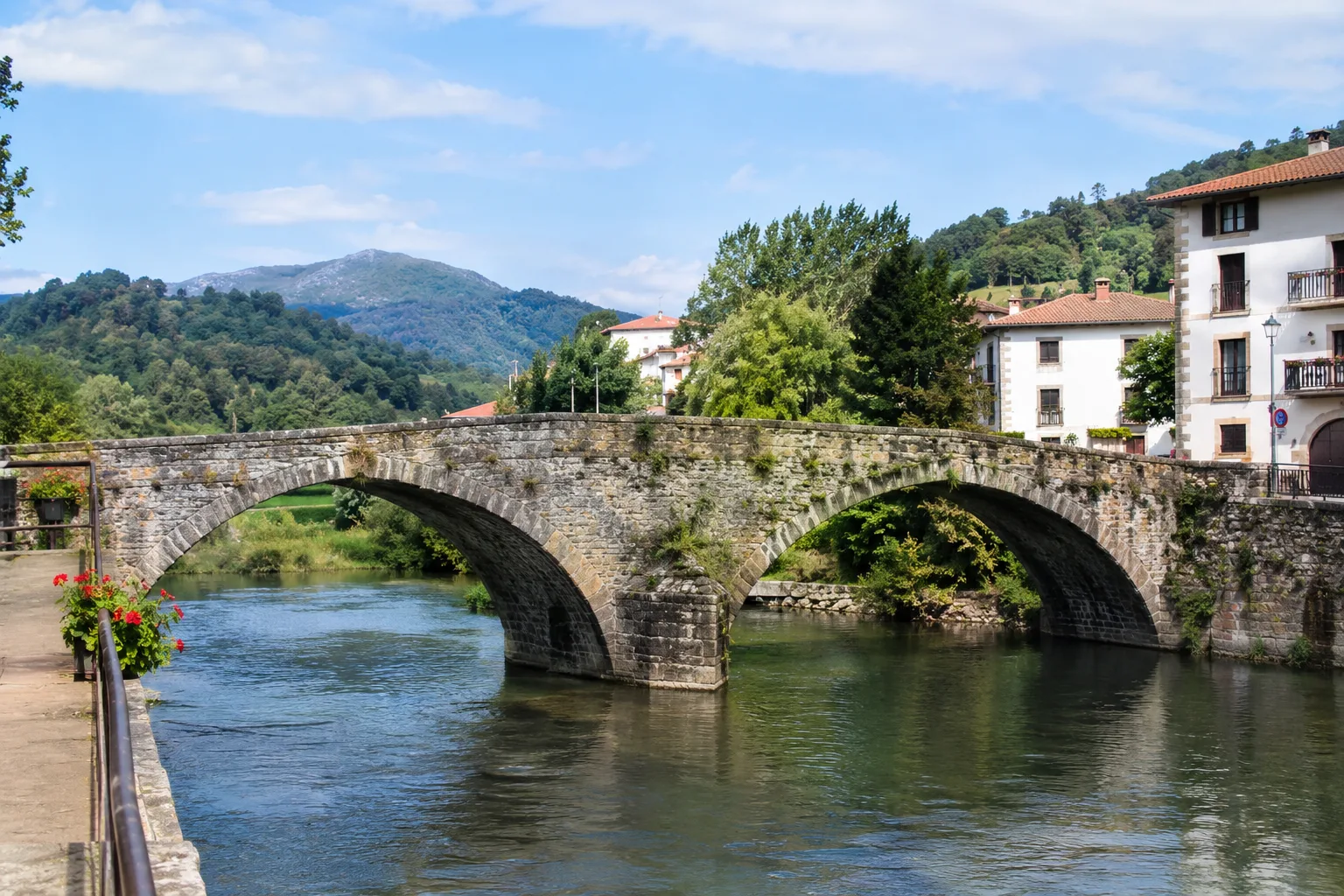
If you are staying in Sunbilla and want to discover more than just its landscapes, there is one place that is well worth a stop: the Medieval Bridge of Sunbilla, built over the Bidasoa River. Although today it forms part of the everyday landscape of the village, for centuries it was a strategic crossing point for communications between Navarre, Gipuzkoa and France.
Behind its stone structure lies a history connected with travellers, soldiers, goods and military supplies, helping to explain why this bridge was so important.
When was the Medieval Bridge of Sunbilla built?
The current stone bridge in Sunbilla was built in 1562, although there had previously been a wooden bridge on the same site. In 1551, the Royal Council had ordered the construction of a completely stone bridge, but various circumstances delayed the works by approximately eleven years.
The decision to replace the wooden bridge was not accidental. The frequent flooding of the Bidasoa River caused problems and made a stronger structure necessary.
The new bridge therefore became a key part of the area's communications network.
Why was the bridge of Sunbilla so important?
The importance of the bridge was mainly related to its position along the old royal road connecting Navarre with Gipuzkoa and, through towns such as Arantza, Igantzi and Lesaka, with France.
Travellers and soldiers crossed here, and supplies were also transported along the route. Historical records specifically document the transport of ammunition from the Eugi factories and the gunpowder factory in Pamplona, as well as other supplies destined for coastal garrisons and naval forces.
This explains why the bridge was more than simply an infrastructure for crossing the Bidasoa. It was also a strategically important crossing point for the Kingdom of Navarre.
Its importance was such that later reconstruction works were financed with the participation of different Navarrese merindades.
A bridge shaped by the flooding of the Bidasoa
The river has also left its mark on the history of the bridge.
In 1625 and 1643, major floods of the Bidasoa destroyed its two largest arches and one of its piers. Because of the importance of this communication route, the bridge had to be rebuilt.
Its strategic value remained important even during the 18th century. Historical records indicate that its demolition was considered as a measure to prevent possible French incursions.
The bridge was later restored in 1987, and in 1992 another bridge was built in Sunbilla to improve communication between the different parts of the village and help preserve the old stone bridge.
The bridge connecting the two parts of Sunbilla
Today, the bridge also has special value for understanding how Sunbilla is organised.
The village centre is divided into two neighbourhoods located on opposite sides of the Bidasoa, historically connected by this bridge. In fact, the structure of the village is closely linked to the relationship between the river, the bridge and its streets, giving Sunbilla the characteristics of both a street-village and a bridge-village.
For this reason, visiting the bridge is not simply about seeing a historic monument. It is also an easy way to understand the history and layout of the municipality itself.
Is the bridge worth visiting during a stay in Sunbilla?
Yes, especially if you are interested in combining history, architecture and landscape during your trip to northern Navarre.
The bridge is located within the village itself and is one of the most representative architectural features of Sunbilla.
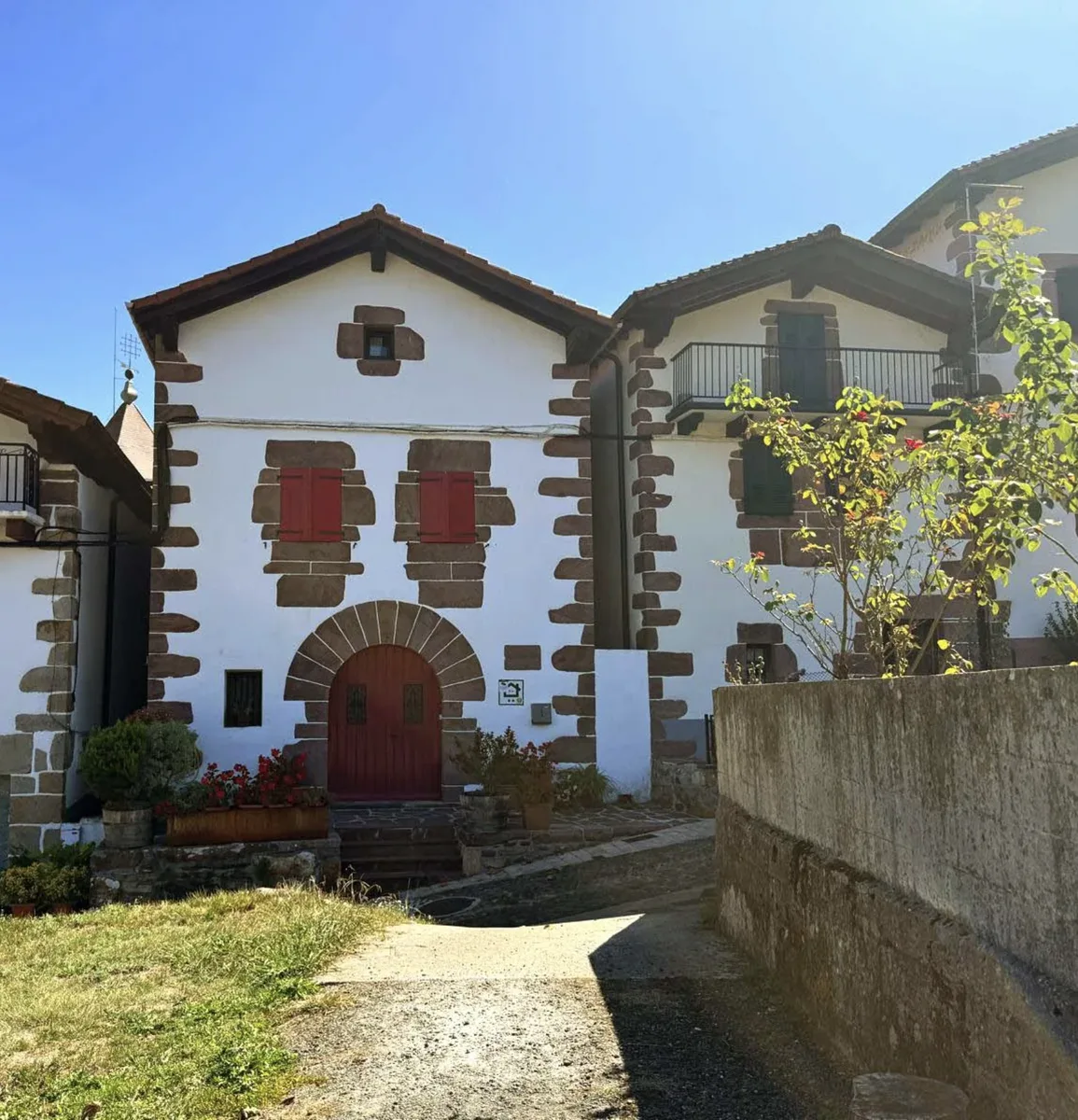
If you stay at Casa Rural Garzibaita, you can take the opportunity to explore Sunbilla at your own pace and visit this old crossing over the Bidasoa. Garzibaita is an entire-rental rural house for up to 10 people, making it a convenient base from which to discover Sunbilla and other places in the Baztan-Bidasoa area over several days.
Beyond simply taking a photograph of the bridge, it is worth understanding what it represented for centuries: a point of connection between territories and an essential infrastructure for travellers, goods and military movements.
Frequently asked questions about the Medieval Bridge of Sunbilla
When was the Medieval Bridge of Sunbilla built?
The current stone bridge was built in 1562, replacing an earlier wooden bridge.
Why was the bridge of Sunbilla important?
Because it formed part of the royal road connecting Navarre with Gipuzkoa and France. Travellers, soldiers and supplies crossed it, including military equipment and ammunition.
Which river does the bridge of Sunbilla cross?
The bridge crosses the Bidasoa River, which divides the centre of Sunbilla into two neighbourhoods.
Is the current bridge the same one from the 16th century?
It is the historic stone bridge built in 1562, although it has undergone several reconstructions and was restored in 1987 following damage over the course of its history.
Where can you stay to visit the Medieval Bridge of Sunbilla?
One option is Casa Rural Garzibaita, located in Sunbilla itself. It is an entire-rental rural house with capacity for up to 10 people, suitable for families and groups who want to use the village as a base for exploring northern Navarre.